Visiting Disney World with an Invisible Disability
Sunday, November 22, 2026
You can absolutely do Disney World with an invisible disability, and you don't have to prove anything to use most of Disney's accessibility services. Wheelchairs and scooters, queue re-entry, rider switch, mobile ordering, refrigerated medication storage and companion restrooms are open to anyone who needs them. The one exception is DAS, which currently is limited to guests with developmental disabilities such as autism.
An invisible disability is any condition people can't see by looking at you. Chronic pain, autoimmune disease, heart and lung conditions, digestive conditions, POTS, epilepsy, diabetes, mental health conditions, chronic fatigue and many more. Here's how to plan around them.
The hardest part is usually other people
Many guests with invisible disabilities hesitate to use a scooter or step out of line because they worry how it looks. My advice: plan for your body, not for strangers.
Disney doesn't ask why you're using a wheelchair or ECV. It doesn't ask for paperwork to rent one, ride in an accessible queue or request an accessible room. If a mobility device keeps you in the park longer and lowers your pain or fatigue, use it.
What DAS covers now
DAS gives return times so you wait outside the physical line. Currently, Disney's wording says it's for guests who, "due to a developmental disability such as autism or similar," are "unable to wait in a conventional queue for an extended period of time."
Many invisible disabilities are not developmental disabilities. If your condition is chronic pain, a heart condition or a digestive condition, for example, expect Disney to point you toward other accommodations instead of DAS.
If a guest does have a developmental disability, registration is a live video chat, up to 60 days before your visit. I cover the steps in my post on how to get DAS. Be honest in that chat. Disney's DAS page says untrue statements can get a guest permanently barred.
Accommodations that help with invisible disabilities
Attraction Queue Re-Entry. One person can leave the line, for a restroom, medication or a break, while the party holds the spot. You rejoin by telling a Cast Member at the front that you need to regroup with your party. You can also wait outside and meet your party near boarding.
Rider Switch. If someone in your party shouldn't ride, the group splits and swaps without waiting in standby twice.
Wheelchair or ECV rental. Currently, Disney rents wheelchairs at $12 a day and ECVs at $65 a day at the parks, water parks and Disney Springs. Prices change. Disney lists a 350-pound maximum on its wheelchairs and 450 pounds on its ECVs. Outside vendors offer multi-day rentals and delivery, which I cover in my scooter rental post.
First Aid. Each theme park has a First Aid center presented by AdventHealth. Disney says First Aid can store medications that need refrigeration.
Companion restrooms. Disney has single-stall companion restrooms across the parks, which help if you need privacy, extra time or a helper.
Special dietary requests. Disney handles allergy and intolerance requests at many restaurants.
Medical equipment. Disney allows medical equipment, including oxygen, into the parks.
Mobile ordering. Mobile food ordering lets you skip the order line and sit down while you wait.
Sensory Experience Details. Disney publishes a guide to lighting, loud noises and sudden movements on attractions. It helps guests with seizure conditions, migraines, sensory processing differences and PTSD decide what to skip.
Accessibility Services. Disney recommends a personal conversation with Accessibility Services to talk through options. You can email Disability Services at disability.services@disneyparks.com.
Pacing matters more than any perk
The most effective tool for an invisible disability is a well-paced plan. When I build these trips, I focus on a few things:
- Pick a resort with easy transportation. A monorail, Skyliner or walking-distance resort cuts a lot of standing and waiting. I cover the best resorts for mobility in a separate post.
- Plan a midday break. Go early, rest in the afternoon, come back in the evening if you feel up to it.
- Use Early Theme Park Entry. Disney Resort hotel guests can enter all four theme parks 30 minutes early, which Disney confirmed.
- Consider paid Lightning Lane. It cuts time standing in queues. Prices vary by date and park.
- Schedule fewer park days in a row. Build in a rest day if your trip is longer than three or four days.
- Book table-service meals. They give you a guaranteed seat in air conditioning.
Heat is a real factor
Central Florida is hot and humid for much of the year. Heat makes many invisible conditions worse, from POTS to multiple sclerosis to migraines. Plan your heaviest park time for mornings and evenings. Carry water. Know where the First Aid centers are. I cover the best times of year to visit in a separate post.
Medication and supplies
A few practical points:
- Pack medications in your carry-on, in their original containers.
- Bring more than you need in case of delays.
- If you need refrigeration in the park, Disney's First Aid centers can store it.
- If you need refrigeration at the resort, ask when you book your room.
- Keep a written list of your conditions and medications on you.
Plus-size and invisible disability
Many plus-size travelers also live with conditions like joint pain, sleep apnea, diabetes or lymphedema. Those are worth planning for on their own. Add ride fit to the list and you have a lot to think about before you even get in line. My Fit Finder shows how rides fit by park, so ride decisions are one less thing to stress about.
Quick answers
Can you get DAS for an invisible disability?
Only if it's a developmental disability, such as autism or similar, that keeps the guest from waiting in a conventional queue. Many invisible disabilities don't meet that definition currently.
Do I need proof to use a wheelchair at Disney World?
No. Anyone can rent or bring a wheelchair or ECV without proof.
Can I take breaks while waiting in line at Disney?
Yes. Attraction Queue Re-Entry lets one person step out of line and rejoin the party before boarding.
Can Disney store my medication?
Yes. Disney says its First Aid centers can store medications that need refrigeration.
Invisible disabilities need real planning, not guesswork. I help build Disney trips around how your body actually works, and booking a Disney package through me usually costs you nothing extra. Start planning your trip here, and grab my free guides while you're at it.
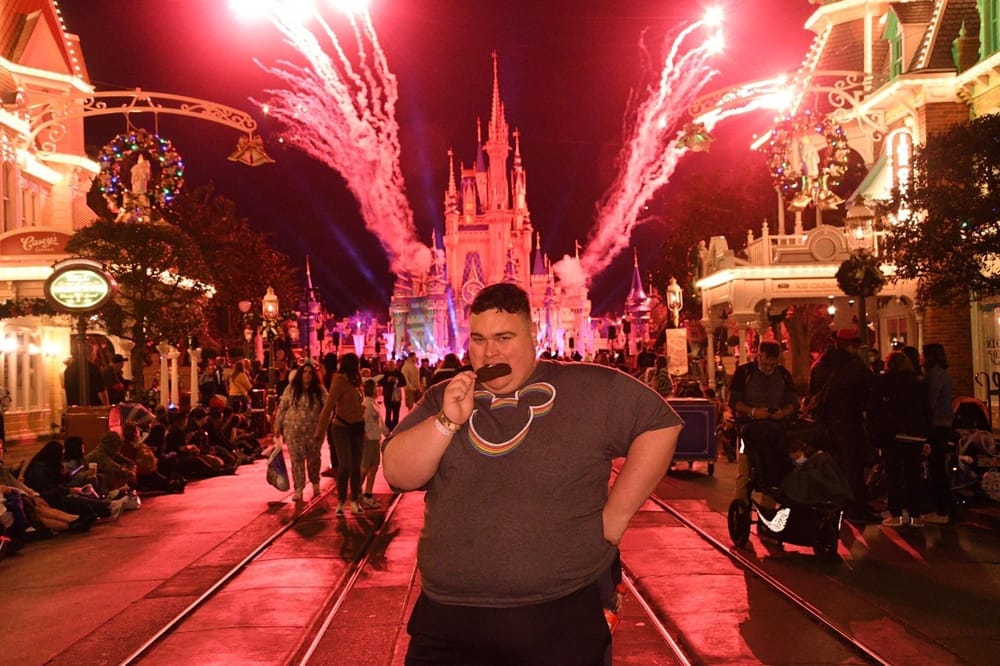
Hi, I'm Jason Vaughn
Fat Tested Travel
I'm a plus size traveler and travel agent. I test theme park rides and cruises in person so you know what fits before you go. Get my ride guides for 40+ parks on the Fat Tested Guides page. More about me.

FatTestedTravel.com - All Rights Reserved 2026 & Beyond